Morocco faces the challenges of internet governance: Will the Ministry of Artificial Intelligence become a lever for digital sovereignty?
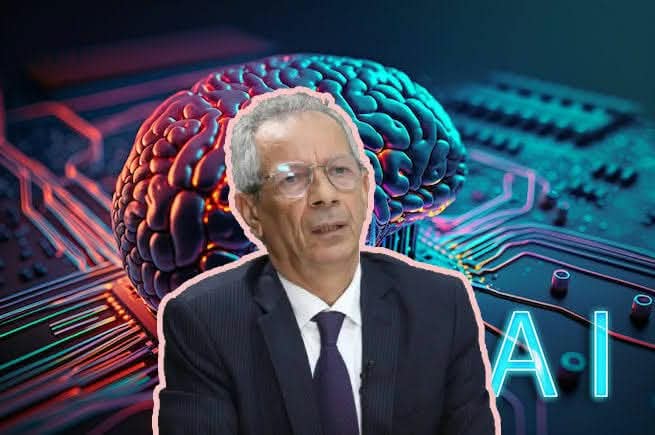
Elmahjoub Dasaa
The inclusion of artificial intelligence (AI) in the official name of the Ministry of Digital Transformation and Administrative Reform, within the framework of the new Moroccan government announced on October 16, 2026, indicates the growing importance of technology in the Kingdom’s institutional choices. The appointment of Ahmed Rahhou to head the « Artificial Intelligence, Digital Transformation, and Administrative Reform » portfolio opens the discussion about the nature of the upcoming digital phase and the limits of the transition from modernizing administration and expanding e-services to building a comprehensive national policy for internet governance.
This shift comes within an international context of increasing competition for control over data and digital infrastructure, the development of artificial intelligence models, and influence on the flow of information across major platforms. The internet is no longer merely a means of communication and data exchange; it has become a space where security, economic, knowledge, and freedom of expression intersect, making its governance a strategic issue that requires a vision that transcends a purely technical approach.

Internet Governance: Beyond the Digitalization of Administration
One of the first challenges facing Morocco is clarifying the place of internet governance within public policies, considering it as a system encompassing the legal, institutional, and technical rules that regulate the operation of the digital space and define the responsibilities of the state, the private sector, platforms, and users.
The success of digital transformation is not measured solely by the number of administrative services available electronically or the speed of transaction processing, but also by the reliability of these services, their ability to protect data, guarantee user rights, and enhance transparency and accountability.
This necessitates effective coordination between government sectors, regulatory bodies, and institutions specializing in cybersecurity and personal data protection, along with the involvement of universities, researchers, the media, civil society, and the private sector in the discussion concerning the future of the internet.
In this sense, the challenge lies in moving from digitizing services to governing the environment that produces these services and within which data and information are exchanged.
Digital Sovereignty: From Consuming Technology to Owning Its Tools
The rapid pace of technological transformations raises the question of digital sovereignty as one of the most prominent challenges facing Morocco. The reliance of administrations, businesses, and citizens on cloud platforms, services, and artificial intelligence systems developed by international companies raises issues related to where data is stored, the conditions for its processing, and the degree of control over the infrastructure and software used.
Digital sovereignty does not mean isolation from global technology, but rather possessing the ability to choose, develop, and negotiate, and to reduce excessive dependence on external service providers, while ensuring the protection of sensitive data and the continuity of vital services.
In this context, the implementation of the « Digital Morocco 2030 » strategy and the « AI Made in Morocco » roadmap presents an opportunity to develop national infrastructure, enhance research and innovation capabilities, build skills, and encourage the production of digital solutions that meet the Kingdom’s economic and social needs. In September 2026, the Ministry in charge of Digital Transition presented the progress of several projects related to digital sovereignty, infrastructure, sovereign cloud, and shared platforms.
The fundamental challenge remains translating these trends into sustainable production capabilities that position Morocco as an active participant in technology development, not merely a consumer of it.

Artificial Intelligence: A Regulatory and Ethical Imperative
The inclusion of artificial intelligence in the Ministry’s name brings to the forefront the question of regulating its uses, particularly in sectors that directly impact citizens’ lives, such as administration, education, health, and financial services.
Alongside the opportunities this technology offers in improving service quality, increasing productivity, and facilitating access to knowledge, the risks of algorithmic bias, privacy violations, the production of inaccurate information, and the difficulty in assigning responsibility for some automated decisions are also prominent.
Therefore, developing a national AI policy should be accompanied by clear guarantees of transparency, data protection, risk assessment, and accountability, while ensuring a balance between innovation requirements and individual rights.
Furthermore, it is crucial to develop tools and models that respect Moroccan linguistic and cultural specificities, including Arabic, Amazigh, and Darija, to ensure a greater presence of local content in the digital environment and expand the potential for technology accessibility for all segments of society.
Digital Platforms and Combating Misinformation
The governance of digital platforms is an increasingly important issue as social media networks expand their influence in shaping public opinion and disseminating news and information. These platforms have become central spaces for public debate, but they also facilitate the spread of fake news, hate speech, and misleading content, including material created using artificial intelligence.
Morocco needs a balanced approach in this area, combining addressing illegal content, enhancing platform transparency, protecting users, and safeguarding freedom of expression and the right to access information.
This approach cannot rely solely on legal solutions; it also requires strengthening media and digital literacy, supporting professional journalism, and enhancing citizens’ ability to verify information and understand the mechanisms of content production and distribution.
Cooperation with major digital platforms remains essential to developing more transparent mechanisms for dealing with illegal content, while ensuring fair procedures and the possibility of appeal and review.
Cybersecurity and Data Protection: The Foundation of Digital Trust
As reliance on digital services expands, the need to protect information systems, networks, and critical infrastructure from attacks and breaches increases. Cybersecurity is no longer a technical matter confined to specialized agencies; it has become a fundamental element for the continuity of public services, the stability of the economy, and the protection of citizens.
Addressing these challenges requires strengthening institutional coordination, developing national expertise, and improving preparedness for responding to cyber incidents, along with raising awareness of the risks of digital fraud, identity theft, and the exploitation of personal data.
Protecting personal data is of equal importance, given the widespread collection and processing of data in administrative and commercial services and digital platforms. Trust in digital transformation is not achieved simply by providing user-friendly applications; it also relies on legal and technical safeguards that prevent the misuse of data and protect privacy.
Digital justice that leaves no one behind
Internet governance is incomplete without ensuring that citizens benefit from the opportunities offered by the digital space, regardless of their geographical location, social status, or level of technical skills.
This presents the challenge of bridging the digital divide between urban and rural areas, improving connectivity, and facilitating access to services for people with disabilities, the elderly, and vulnerable groups.
Furthermore, providing digital content that is appropriate for Morocco’s linguistic and cultural diversity, and promoting training in digital skills, are essential prerequisites for transforming technology into a driver of development and social inclusion.
Digital citizenship is not simply about having internet access; it also encompasses the ability to use the internet safely and responsibly, benefit from its services, and understand the rights and responsibilities associated with being present in the digital space.
Morocco and International Internet Governance
The stakes of the internet extend far beyond national borders. Data, cloud services, platforms, and cyberattacks are all interconnected through cross-border networks and relationships. Therefore, Morocco needs to strengthen its presence in international discussions on internet governance and artificial intelligence, and contribute to developing a framework that balances innovation, security, and fundamental rights.
The Kingdom’s regional location and its African and international partnerships offer opportunities to enhance cooperation in cybersecurity, share expertise, develop skills, and build digital capacity.
Furthermore, international participation should extend beyond mere attendance at forums and meetings to actively contributing to the formulation of standards and principles that shape the future of the digital space, and advocating for the interests of developing countries in accessing technology, knowledge, and infrastructure.
From a Name Change to a Practice Change
The creation of a ministerial portfolio called “Artificial Intelligence, Digital Transformation, and Administrative Reform” gives this issue a clear institutional presence, but it does not, in itself, constitute proof of a complete national internet governance policy. The value of the transformation will be determined by the ministry’s ability to coordinate policies, clarify responsibilities, and translate announced strategies into measurable and evaluable programs.
This necessitates setting practical objectives in the areas of digital sovereignty, data protection, cybersecurity, regulating the use of artificial intelligence, developing local content, and promoting media and digital literacy, while involving various stakeholders in evaluating the results.
Ultimately, the challenge for Morocco lies not only in keeping pace with technological transformations but also in possessing the capacity to guide them in a way that serves development, protects rights, and strengthens trust in institutions. Internet governance is not a limited technical or administrative matter, but rather an issue linked to the future of the economy, knowledge, and the public sphere.
Hence, the real test for the new ministry will be its ability to move from managing digital transformation to building a Moroccan model for internet governance that balances sovereignty and openness, innovation and responsibility, security and freedom, and gives the citizen a central position in digital policies.