ALDAR/ Iman Alaoui
Canadian newspaper Western Standard has published an article by independent Canadian journalist Daniel Robson titled: “The 2026 World Cup Isn’t a Soccer Tournament — It’s a National Security Crisis Waiting to Happen”, in which he examined the major security challenges facing Canada ahead of hosting the 2026 FIFA World Cup.
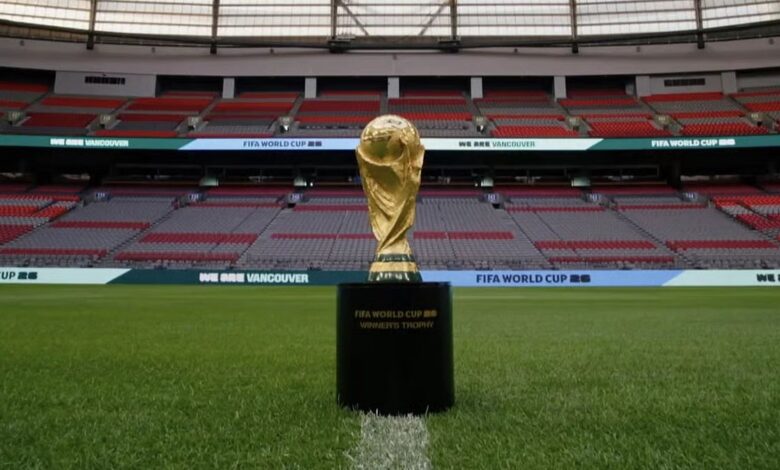
The writer said public debate in recent months has focused on tournament costs, civic prestige and promises of economic gains. While important issues, they are not the most critical one as kickoff approaches. The central question, he argued, is security: can Canada turn years of planning into a coordinated, resilient and trustworthy system capable of performing under pressure?
He noted that this test has already begun, as Canada will host matches in Toronto and Vancouver. The federal government has described the tournament as a complex operation involving border management, transport systems and security coordination with the United States and Mexico. According to the article, the World Cup is no longer simply a sporting event with a security component, but a national preparedness challenge.
Robson pointed out that Ottawa has moved beyond symbolic preparations. Canada’s immigration authorities have already issued specific guidance for supporters, workers, volunteers and individuals invited by FIFA.
Canada has also clarified that there will be no special World Cup visa, that applications must be submitted early, and that holding a ticket does not guarantee entry. The writer said such details are part of real security readiness, because protecting an event of this scale depends not only on policing, but also on organised entry systems, fraud prevention, clear procedures and reducing administrative friction before it turns into a public-order problem.
He added that planning in Toronto reveals the scale of the challenge when ambition shifts into execution. The city will host six matches, and budget documents show safety and security are among the main reasons for rising operating costs. Toronto’s 2026 World Cup operating budget stands at around CAD 226.353 million, with security at the core of that framework.
He noted that Toronto’s Auditor General had already stressed the need for strong oversight and transparent reporting given the size of the event, its cost and its political exposure. According to the article, security planning is therefore not only about barriers and patrols, but also about institutional discipline, risk management and governments’ ability to control a complex, expensive and politically sensitive file.
Emergency planning documents in Toronto also show that FIFA’s integrated safety and security unit has been responsible for training incident-management systems linked to the tournament, while acknowledging that World Cup requirements are placing pressure on broader training capacity. Readiness, Robson said, is not an abstract concept — it consumes manpower, time, money and institutional attention long before the first match begins.
In Vancouver, which will host seven matches as well as parallel fan events including the FIFA Fan Festival, the city has adopted a temporary regulatory framework aimed at preserving public safety, ensuring smooth operations and strengthening enforcement powers during the tournament.
The writer said this kind of preparation rarely makes headlines, yet it lies at the heart of real major-event security, as it includes adapting laws, regulating public spaces and providing enforcement tools suited to the operational realities of an intensive global event.
Robson argued that the clearest sign of Canada’s seriousness is that it is not preparing alone. In March 2026, representatives of Canada, Mexico and the United States met in Washington during a trilateral summit on major-event security, where they presented national frameworks, governance structures, planning milestones and inter-agency cooperation mechanisms.
The agenda reportedly included cross-border information sharing, operational interoperability, cyber threats, disinformation campaigns, drones and operational support. He stressed that the success of a jointly hosted World Cup will not be measured only by each city’s ability to secure its stadium, but by the host nations’ ability to manage gaps between systems and authorities without dangerous friction.
He added that the United States has also established a federal structure for the challenge through a White House task force for the 2026 World Cup, coordinating nationwide efforts through inter-agency cooperation, intelligence sharing and support for host cities.
Canada, he said, should be judged by the same standard — not by promotional campaigns, but by its ability to unite police, intelligence, transport, border management and emergency response into one coherent operational model.
The article then cited international examples illustrating what serious preparation looks like. In France, ahead of the Paris 2024 Olympics, then Interior Minister Gérald Darmanin said in April 2024 that “France would be more exposed to terrorism without Moroccan intelligence services,” adding that his country was grateful for Morocco’s support in preparation for the Games.
Robson noted that the significance of that statement lies in its timing: it was made before the event, when preparation matters most.
He added that the same logic is even clearer in the United States. In January, an official post by the US Embassy in Morocco announced that the FBI had visited Morocco to review security arrangements for the Africa Cup of Nations, as part of a broader law-enforcement partnership.
This week, the US mission went further by congratulating Morocco on being selected to participate in a White House World Cup task force aimed at strengthening security cooperation for the upcoming tournament.
According to the writer, these signals show that the United States approaches major-event security through early operational exchanges and partnerships that go beyond conventional circles.
He also referred to Qatar’s experience, where Qatar and Morocco signed a joint declaration before the 2022 World Cup to exchange tournament-related information, while reports at the time said Morocco was also considered for intelligence and cyber support.
Robson concluded that the pattern is clear: governments that successfully prepare for major sporting events identify useful expertise early and make use of it before pressure peaks.
For Canada, the lesson goes far beyond protecting stadiums or managing crowds. The World Cup will require institutions capable of linking intelligence, policing, cyber awareness, mobility planning, border operations and international coordination into one system that can withstand pressure.